
El Rio Health at 55
Building a Health Home for Life
By Loni Nannini
For 55 years, El Rio Health has been blazing trails in Tucson’s well-being and building a “health home for life” where care meets community.
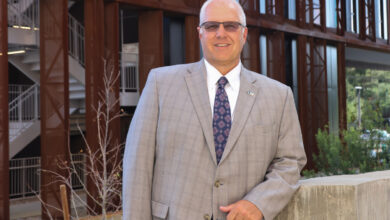
“Having your health home at El Rio Health is a patient-centered, team-based model of care that supports individuals through every stage of life,” said Clinton Kuntz, DBH, CEO of El Rio Health.
“It is not just about having a health center to visit − it’s about having a trusted care team that knows your history, understands your needs, and helps you navigate the healthcare system with care and compassion.”
That distinctive philosophy has catapulted what began as a small clinic for underserved patients west of downtown Tucson into a thriving community health center serving 130,000 patients at 14 Pima County locations, with another slated to open in 2026.
With over 1,900 employees, El Rio’s state-of-the-art facilities offer one-stop access to primary and preventive care in medical, dental and behavioral health. Services extend to women’s health − prenatal care, OB/GYNs and midwives − and imaging services as well as cancer screenings.
El Rio also integrates a range of wellness programs − yoga, Tai Chi and more − and an ever-expanding list of comprehensive care including chiropractic, physical therapy, pharmacy and lab services and much more.
“We offer a multitude of services for all ages all under one roof,” Kuntz said. “Our ‘whole-person’ care model makes us unique, and it is open to everyone. The entire model of community health centers is to get people into care.”
El Rio is committed to serving patients regardless of ability to pay, including those who are uninsured. It also welcomes a growing base of patients with private insurance.
The model is distinctive in the rapidly growing sector of non-profit community health centers that contributed more than $85 billion in U.S. economic output in 2021 (according to Matrix Global Advisors) and served a record 33.9 million patients nationwide in 2024.
“El Rio Health is increasingly recognized as a national model for community health centers due to our innovative, patient-centered approach, our commitment to underserved populations, and our demonstrated excellence in care delivery and operational efficiency,” said Kuntz, citing accolades such as the American Medical Association Joy in Medicine Gold Award and the Health Information and Management Systems Society Davies Award. El Rio has also received certification from the National Committee for Quality Assurance Patient-Centered Medical Home and numerous accreditations from the Joint Commission.
“We are building a scalable, data‑driven, quality‑based model that we love to share with other health centers in order to expand access, improve outcomes, and lower total cost of care for all patients and communities,” said Kuntz.
Strategy for A Quality Continuum of Care
The El Rio model is based on a transformational 2025 Strategic Plan that focuses on five essential pillars: growth, sustainability, recruitment and retention, community partnerships, and operational excellence. The pillars encompass initiatives such as expanded access to integrated care; leveraging technology and data for improved outcomes; and addressing Social Determinants of Health (SDOH) and community partnerships.
“As an organization, these strategic initiatives and pillars ensure accountability and progress across all our departments,” said Kuntz. “For example, each pillar is tied to measurable goals like automating processes, improving patient safety, and expanding value-based care initiatives.
“These pillars also foster cross-functional collaboration as seen in strategic planning sessions where leaders complete items to improve communication, streamline credentialing, and integrate population health strategies to better serve patients and improve efficiency.”
Leadership of El Rio’s board of directors has been vital to development of the impactful strategies, according to Kuntz.
More than half of the board members are El Rio patients, and he credits deep community ties with providing unique insight into the health, lives and needs of diverse patient populations in Tucson.
Board Chair Francisco Muñoz, a member of the Pascua Yaqui Tribal Council, became involved with El Rio 25 years ago when he learned about the Asthma Intervention Program and Advanced Practice Pharmacy Diabetes Program. Both initiatives provide patient care, education and management of the chronic conditions and related diseases.
“These are two big areas of concern for the tribe. We met with the head of the diabetes program and with the staff of the asthma program and partnered with El Rio to give money to introduce these programs to the tribe,” said Muñoz, who was so inspired that he became a patient advocate at the El Rio Pascua Health Center in 2004.
“I saw that they were producing real numbers and improving patients’ health, and I was impressed and grateful to see that in real time,” he said.
Muñoz is grateful to the “visionaries” and healthcare providers who have supported El Rio’s growth, including its bold $40 million expansion with the largest facility yet at El Rio Stone Health Center opening in 2026.
“I am proud of the growth because that means we are reaching more people in the various areas and bringing good healthcare to as many as possible. We all deserve that much,” Muñoz said.
Connecting Clinic & Community
Medical and non-medical community collaborations are central components of the initiatives that are shaping national conversations around El Rio Health outcomes.
Partnerships with municipalities, social service agencies and nonprofits address socioeconomic, environmental and community-based barriers to health. Partners include the City of Tucson, the Community Food Bank of Southern Arizona, Old Pueblo Community Services, Interfaith Community Services, Emerge Center Against Domestic Abuse and countless other organizations.
“Our approach includes proactive screening for Social Determinants of Health and partnership with community organizations and services tailored to individual needs,” said Dr. Sonia Reidy, senior medical director at El Rio. “We have a robust team of community health advisors who help connect patients to our community partners for legal needs, housing needs, resources for food and more.”
El Rio is also building collaborations that promote workforce development in response to the ongoing shortage of primary healthcare providers.
“We actively collaborate with federal agencies, public officials, universities and peer organizations,” Kuntz said. “We also collaborate with other community health centers and various entities through initiatives like the Southern Arizona branch of Arizona Health Education Center at El Rio (a partnership with the University of Arizona) and our Nurse Practitioner Residency Program to train the workforce of tomorrow.”
Collaborations are further facilitated by the El Rio Foundation, which was started in 2001 to support El Rio through fundraising, outreach and education.
Powered by more than 65 volunteers, including a dynamic group of young professionals known as the Vecinos (“neighbors” in Spanish), the foundation has raised more than $46 million.
“This is a true testament to the generosity of this community,” said Brenda Goldsmith, executive director of the foundation. “Almost all of the funds raised are private philanthropic dollars from individuals, foundations and corporations primarily here in Tucson, Arizona.
“I credit the foundation board, our team and the Vecinos for working hard to develop relationships, throw wonderful events, write grants and collectively engage people in considering El Rio as a potential charity of choice.”
Goldsmith said that opportunities for donor and patient engagement abound as El Rio moves forward in its mission to provide safe, quality and increasingly personalized medicine to all patients.
“At the heart of our vision for the future of El Rio is a continued transformation and continual movement toward patient-driven care,” said Kuntz. “This means empowering patients to actively participate in their health journey.”
READ THE FULL SPECIAL REPORT HERE.