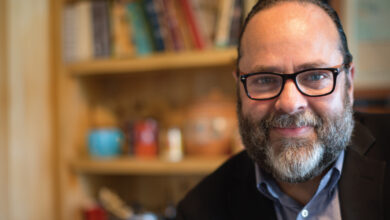

Sharon McDonough
Chief
Tucson Fire Department
By Rodney Campbell
While working her way up the ladder to become Tucson Fire Department Chief, Sharon McDonough learned valuable lessons she’s now using to run a public-safety organization with more than 700 employees.
Atop the list: Her employees are ordinary people doing extraordinary work.
“We’re seeing things we shouldn’t see,” McDonough said. “We’re humans, too. We have normal lives with normal challenges. We have struggles in our marriages, some members struggle with substance abuse, everything the public has. But on top of the normal life struggle, we also deal with tough calls that we go to one after another and have very little time to recoup.”
When McDonough became Tucson’s first female fire chief in March 2025 after working for the agency since 1990, she made call reduction a priority. Instead of, for example, sending two trucks with six people on a typical trip, the department has found that one truck with two or four personnel can do the job.
“We’ve reduced the call load on our 18 busiest trucks by 10%,” she said. “That gives our troops enough breathing space to rest, get a workout and a good lunch.”
TFD personnel now have expanded mental health options, including a popular therapy dog named Ember. An athletic trainer has been hired, and McDonough will soon bring a wellness coordinator on board.
She said a recent survey revealed a 58% increase in job satisfaction among her troops. Even those who resign generally aren’t doing so out of frustration.
“During exit interviews, we’re seeing people leave for healthier reasons,” McDonough said. “They have family reasons to leave the state or are pursuing a different level of their careers.”
Lew Harris recently left his post as an assistant chief with Tucson Fire to become chief in Pearland, Tex. He worked with McDonough for 28 years, and they built a friendship and mutual respect.
“The troops always feel heard by Sharon,” he said. “That’s an important part of the puzzle. She looks out for the troops and what they value. That’s something that really connects with the field.”
The work never ends, and McDonough is up to the challenge. She knows the department will be judged by how effectively it serves the community.
“Every day when I come in, I think about our responsibility,” she said. “The biggest thing we often fail at is the responsibility to take care of the people who deliver the service. When you take care of them, they can take care of the business.”
Photo by Brent G. Mathis