
GUEST COLUMN: Our Regional Competitiveness is on the Mar. 10 Ballot
By Ted Maxwell
President & CEO
Southern Arizona Leadership Council
Props 418 & 419: Our Regional Competitiveness is on the March 10th Ballot
For business leaders and economic stakeholders in Pima County, Propositions 418 & 419 (also known as RTA Next) are not just ballot measures. They are strategic choices that could define the region’s economic vitality for decades. RTA Next is a proposed 20-year, $2.67 billion transportation investment plan that builds on the success of the original Regional Transportation Authority (RTA) plan approved in 2006, and it offers the most compelling pathway for sustainable economic growth, job creation, and improved regional competitiveness.
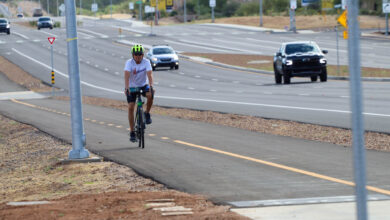
Fundamentally, Props 418 & 419 are about expanding and modernizing the transportation infrastructure that underpins every thriving economy. The plan includes major roadway improvements, expanded transit service, pedestrian and bicycle infrastructure, and targeted enhancements to safety and accessibility – all delivered without increasing the current tax rate. Let me say that again: Props 418 & 419 allow for continued investment in infrastructure with zero increase in taxes. Read on for all the reasons that makes your two YES votes absolutely essential in our Pima County-wide Special Election (by mail) this March.
A Catalyst for Job Growth and Economic Activity
Perhaps the most direct economic benefit of Props 418 & 419 are the projected impact on jobs and economic output. According to RTA Next figures, the plan is expected to produce 48,000 additional permanent jobs over the next 20 years from ongoing economic opportunities stimulated by improved transportation networks.
Short-term construction jobs are also created leading to: better roads, transit options, and connectivity help businesses grow by making it easier for employees to get to jobs, for customers to access services, and for goods to move efficiently throughout the region. Studies of regional transportation investment typically find that every dollar invested generates multiple dollars in economic returns as reduced travel time, greater mobility, and enhanced access to markets unlock productivity gains.
These economic benefits are further complemented by $3.7 billion in regional economic returns projected over the life of the plan – a powerful indicator that strategic infrastructure investment isn’t a cost but a catalyst for broader economic expansion and business development.
Strengthening Competitiveness in a Changing Economy
In today’s economic environment, regions with efficient, multimodal transportation systems enjoy a competitive edge. Businesses increasingly consider accessibility and mobility when selecting locations for offices, distribution centers, and manufacturing facilities. Workers, too, are more attuned than ever to quality of life factors like commute times and access to transit options.
By investing in more than 30 multimodal roadway corridor projects, RTA Next aims to reduce congestion, link neighborhoods with job centers, and connect Pima County in a way that supports both business mobility and work-life balance for residents.
This focus on connectivity, improving how people and products move throughout the region, drives greater economic dynamism. When employees can reach jobs with ease and businesses can reliably transport goods, the entire economic ecosystem becomes more resilient and efficient.
Supporting Small Business and Broader Community Prosperity
Transportation investment doesn’t just benefit large companies – it supports small businesses throughout the region. Roadway improvements make commercial corridors more accessible and attractive to customers; expanded transit service increases foot traffic for local retail and service-oriented enterprises; and more reliable infrastructure attracts new businesses that expand the local tax base and job opportunities.
Furthermore, RTA Next includes funds to support small business assistance programs during construction, helping mitigate disruption and ensure local entrepreneurs can thrive even as improvements are underway.
For communities with limited access to transportation options, improved sidewalks, bike lanes, and transit service also mean more economic inclusion – empowering residents without personal vehicles to reach jobs, training programs, and business opportunities they might otherwise miss.
Environmental and Quality-of-Life Returns That Matter to Everyone
A modern transportation system is not just an economic engine – it’s also a quality-of-life investment. RTA Next includes substantial funding for environmental protections, such as improved air quality measures and safer corridors for non-motorized travel.
Healthier, cleaner communities are more attractive places to live and work. As businesses compete for top talent, having a livable region with strong sustainability values becomes a recruitment and retention asset. Employers increasingly recognize that access to quality transit and pedestrian infrastructure makes their workforce more productive, less stressed, and more connected to the community.
Infrastructure is more than concrete and transit lines – it’s the backbone of economic opportunity. Props 418 & 419 offer Pima County a vision for the future that integrates mobility, quality of life, and economic competitiveness into a strategic 20-year plan. With tens of thousands of new jobs, billions in economic returns, and no increase in the current tax rate, RTA Next stands as a smart investment for businesses, residents, and future generations.
For business leaders who care about growth, prosperity, and the long-term health of the regional economy, voting YES on both Props 418 & 419 is not just sensible – it’s crucial.
Ted Maxwell is President & CEO of the Southern Arizona Leadership Council and currently serves as a member of Pima County’s RTA Board and Chair of the Arizona State Transportation Board.