University of Arizona Veterinary School Gets Full Accreditation
By Logan Burtch-Buus, University Communications
After establishing a robust curriculum, publishing research and graduating more than 300 veterinarians, the University of Arizona College of Veterinary Medicine has reached another significant milestone: full accreditation from the American Veterinary Medical Association Council on Education.
The state’s first and only public veterinary medicine program, the college received approval in 2019 to begin enrolling students, with graduates fully eligible to sit for licensure to practice veterinary medicine – and graduated its first cohort of students in 2023.

“The University of Arizona is proud of the groundbreaking work taking place every day at the College of Veterinary Medicine. Achieving full accreditation is a powerful endorsement of our commitment to veterinary education,” said President Suresh Garimella. “I am grateful to Dean Julie Funk for her steadfast leadership and to our faculty and staff for their dedication to delivering a future-focused, accelerated curriculum that prepares our students to solve grand challenges while meeting the growing demand for veterinary professionals.”
Accreditation for veterinary medical education involves a self-evaluation by the college, site visits and regular written reports on standards. Key areas evaluated include the curriculum, research enterprise, the quality of support and resources offered to faculty, staff and students, and the college’s ethical guidelines and conduct.
Dr. Julie Funk, dean and a key architect of the college’s innovative curriculum and methodology, called accreditation an affirmation of the institution’s commitment to academic excellence.
“Accreditation is a rigorous quality assurance process, and it confirms that we are meeting the highest standards in veterinary medical education,” Funk said. “Our faculty are content experts, and we know that our graduates leave as day-one-ready veterinarians well prepared to serve their communities.”
Animal interactions
Historically, veterinary medicine students often entered school with years of experience working with animals – frequently from living on or near farms, said Dr. Alex Ramirez, senior associate dean for academic progress and faculty affairs. As that now occurs less often, the college aims to replace lost experience as early and effectively as possible.
A key element of the program is that students work with live animals starting their first week, unlike many programs that reserve that experience for third-year students. The college also uses an accelerated three-year curriculum that eliminates summer breaks, allowing students to maintain year-round engagement and graduate more quickly compared to traditional four-year programs.

“Rather than waiting for years to see something in a clinic and discover why it’s really important, our students keep those lessons fresh in their minds throughout their experience,” Ramirez said.
Students’ first two years involve foundational courses in subjects like immunology, anatomy and vital organ systems, plus more advanced courses such as clinical management and surgery. Students reinforce their studies by training with livestock at the Campus Agricultural Center, among other opportunities.
Third-year students work in clinics and general practices throughout the country and complete rotations in specialty subjects such as surgery or internal medicine. Electives in areas like business and even honeybee health round out the curriculum.
Connecting classrooms and research
In addition to education and faculty development, the college also explores the broader work of veterinarians, including research into the health of pets and the complex nature of human-animal interactions.
The college’s research unit, led by Maggie O’Haire, professor and associate dean for research, carries out an initiative to advance human-animal well-being. O’Haire said this focus has the potential to create meaningful change not just in veterinary medicine, but in the health and quality of life for people and animals everywhere.
Research from the college includes studies on the effectiveness of service dogsin alleviating the symptoms of post-traumatic stress disorder for veterans, as well as their effectiveness when compared to usual care alone. They have developed canine aptitude tests, discovered that dogs may be “biologically prepared” to become humanity’s best friend – and even appeared in a Netflix documentary.
“We aim to prepare our students to be day-one-ready in clinical practice, while also equipping those interested in research with a strong foundation,” O’Haire said. “Through their training, our students develop a critical eye for evaluating new scientific findings and understanding how to apply that knowledge in real-world settings.”
The future of veterinary medicine
With full accreditation now under her belt, Funk hopes Arizonans will recognize the college as the premier institution in the practice and research of animal medicine.
“I want us to be known for the excellence of our graduates and the impact they have on their communities,” she said. “We focus a lot on teaching, but we also house the world’s best research team surrounding the study of human and animal well-being, and I look forward to seeing the impact of their discoveries on the future of veterinary medicine.”
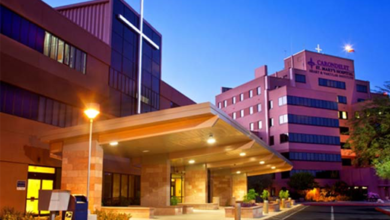
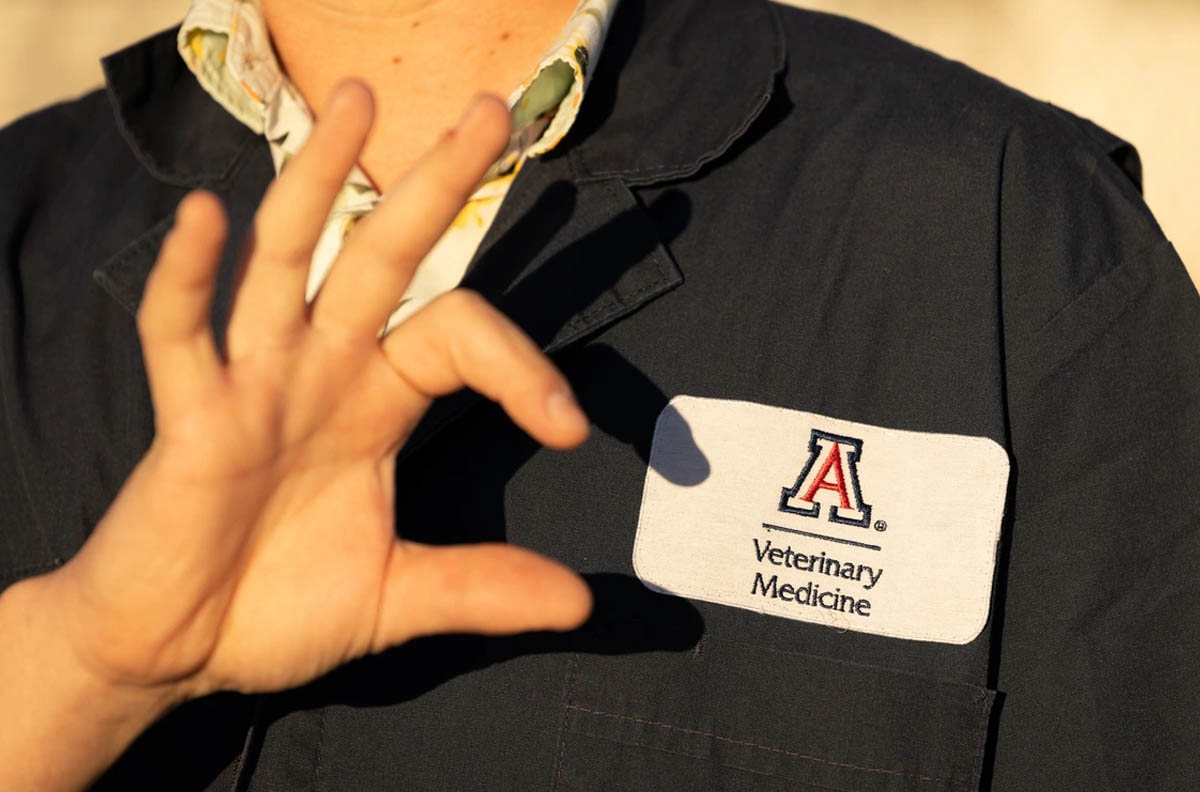
Pictured above – Located in Oro Valley, Arizona, the University of Arizona College of Veterinary Medicine is the state's first and only fully accredited public veterinary school. The college began enrolling students in 2019 and graduated its first class in 2023. Photos by Chris Richards/University Communications