Pima Community College’s IBEST Program Shortens Path to Careers
By Tiffany Kjos
Going back to school to train for a new job or earn a high school equivalency diploma can be transformative but time-consuming. Pima Community College is helping adult learners shorten that path by building basic academic skills while they train for careers.
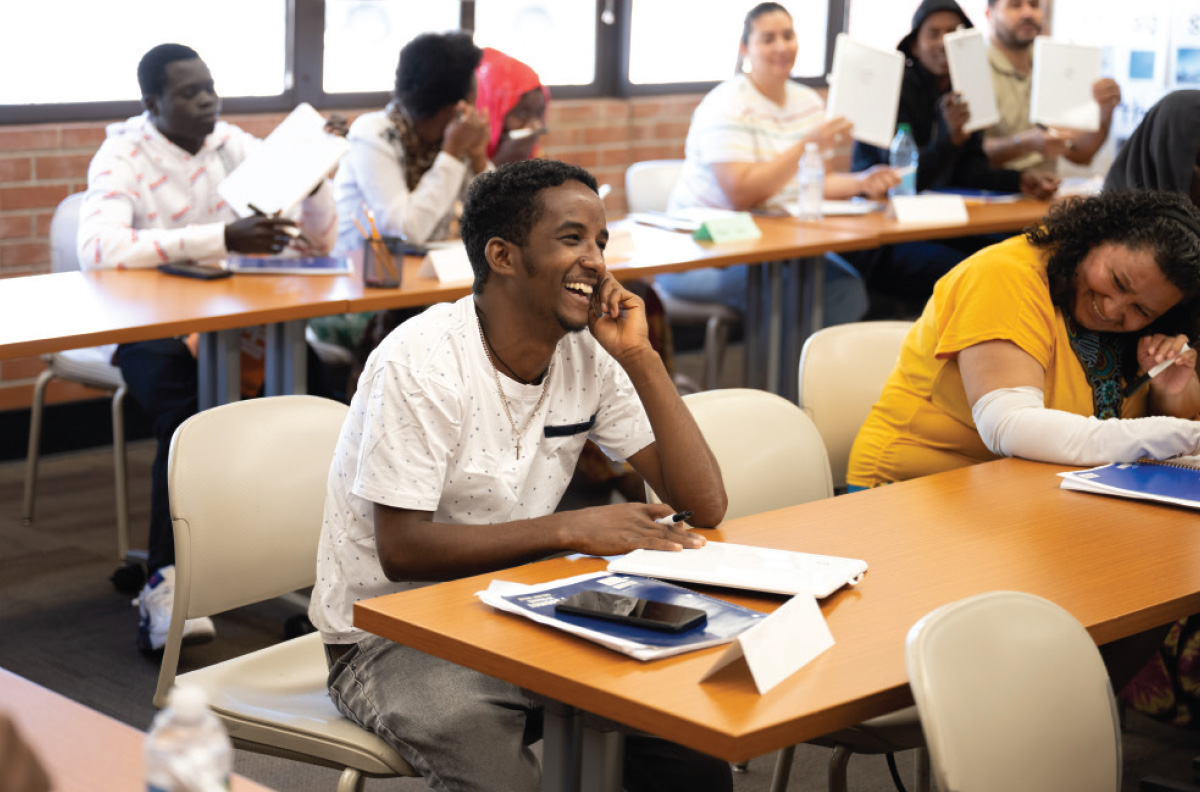
Among Pima’s efforts is IBEST, or Integrated Basic Education and Skills Training. Rather than requiring students to complete separate remedial courses before beginning college-level career training, IBEST allows them to tackle both simultaneously with two instructors teaching each course, said Wendy Scheder Black, PCC director of teaching and learning, Adult Basic Education for College and Career.
“This educational model creates an environment for learners to develop basic reading, writing, math, English and digital skills at the same time they are in college programs,” she said. “So, it really accelerates the journey for these learners to go through their basic skills education and through college training and into the workforce.”
PCC launched IBEST a dozen years ago and has seen completion rates of 75%, Scheder Black said. The program is offered in select college certificate programs that are designed for direct employment, most culminating in a Level 1 certificate that students can earn in a year or less.
Along with helping students, IBEST is addressing a critical worker shortage here. Tucson’s core industries—including aerospace/defense, IT and cybersecurity, advanced manufacturing, public safety and healthcare—all have difficulty finding trained employees, said Amanda Abens, PCC assistant vice chancellor for workforce development.
“In order to be able to attract new employers as well as support our existing employers and those looking to expand, it’s imperative that we tap into some of the underserved markets. Otherwise, the numbers just are not there coming out of high school to meet our employers’ needs.”
So, the college’s efforts benefit not only students but local employers as well, according to Laurie Kierstead-Joseph, assistant vice chancellor for Adult Basic Education for College and Career.
“In Pima County, there are over 70,000 adults who need a high school diploma and there’s another almost 60,000 who are linguistically isolated—they need those English skills if they’re going to access any college or career training,” she said. “We serve over 4,000 learners a year in our various programs, all adult learners who are working on those skills they need to be ready for college and career.”
IBEST is paid for through the federal Workforce Innovation and Opportunity Act, with the state matching dollars and local funding. While the program is free, students pay for credit courses themselves. But IBEST provides a unique financial opportunity for those without a diploma.
“It’s only through this type of program that someone who doesn’t yet have a high school diploma can access financial aid, through a provision called Ability to Benefit,” Kierstead-Joseph said.
IBEST is part of a broader approach known as Integrated Education and Training, or IET, which PCC is expanding to create even more entry points for adult learners. In 2021, the Adult Basic Education program partnered with the college’s Public Safety and Emergency Services Institute to provide CPR and first aid training along with health-focused reading, writing, math and English instruction. More than 400 adult learners have completed CPR and first aid training through the health IET programs.
One of the newest IET programs involves Pima’s nursing department, where faculty saw many students who were skilled and academically ready struggling with English language skills because English was not their first language. That led to the eight-week Health Bridge program for English language learners, in which students receive English instruction contextualized around healthcare while taking HRP 100, a one-credit health profession introductory course. They also complete basic life support training and get that certification as well.
English language learner Lorenia Grijalva learned about Pima’s Health Bridge program while taking English for Speakers of Other Languages classes through the college. Already interested in a healthcare career, she enrolled and last spring, earned college credit and Basic Life Support certification.
Grijalva has since started Pima’s medical billing and coding certificate program. She said Pima instructors and staff have helped her with more than academics, assisting with financial aid forms, connecting her with advisers to work on her educational goals and even loaning her a laptop after hers broke.
“Pima has a lot of good teachers who help us with whatever we want,” she said. “I feel comfortable being at Pima because I don’t feel alone. I have friends, like a family.”
Photo courtesy Pima Community College