City of the Arts
From Visual to Performing Arts, Downtown is Arts Epicenter
By Valerie Vinyard
The downtown arts scene is a draw that lures the masses for a magical experience.
Whether through the performance arts—concerts, exhibitions, theater, and dance—or the distinctive museums and venues that showcase paintings, photography, sculptures and other mediums, Downtown Tucson knows how to entertain, educate and inspire.
This vibrant array of arts and culture is a contributing factor to the city’s recognition in the 2026 USA Today 10 Best Readers’ Choice Awards, highlighting its appeal as a travel and living destination.
The Power of Performance
Downtown Tucson’s performing arts offer “far more than great shows: they are economic and community assets that help define who we are as a region,” according to Laura Shaw, chief communications officer for The Chamber of Southern Arizona.
Performing arts power players such as the Tucson Symphony Orchestra, Ballet Tucson, Arizona Opera, and Arizona Theatre Company also create a true sense of place.
“A vibrant performing arts district attracts visitors, supports restaurants and small businesses, creates jobs and makes Southern Arizona a more compelling place to live, work, invest and build a business,” said Shaw.
Orchestrating Change
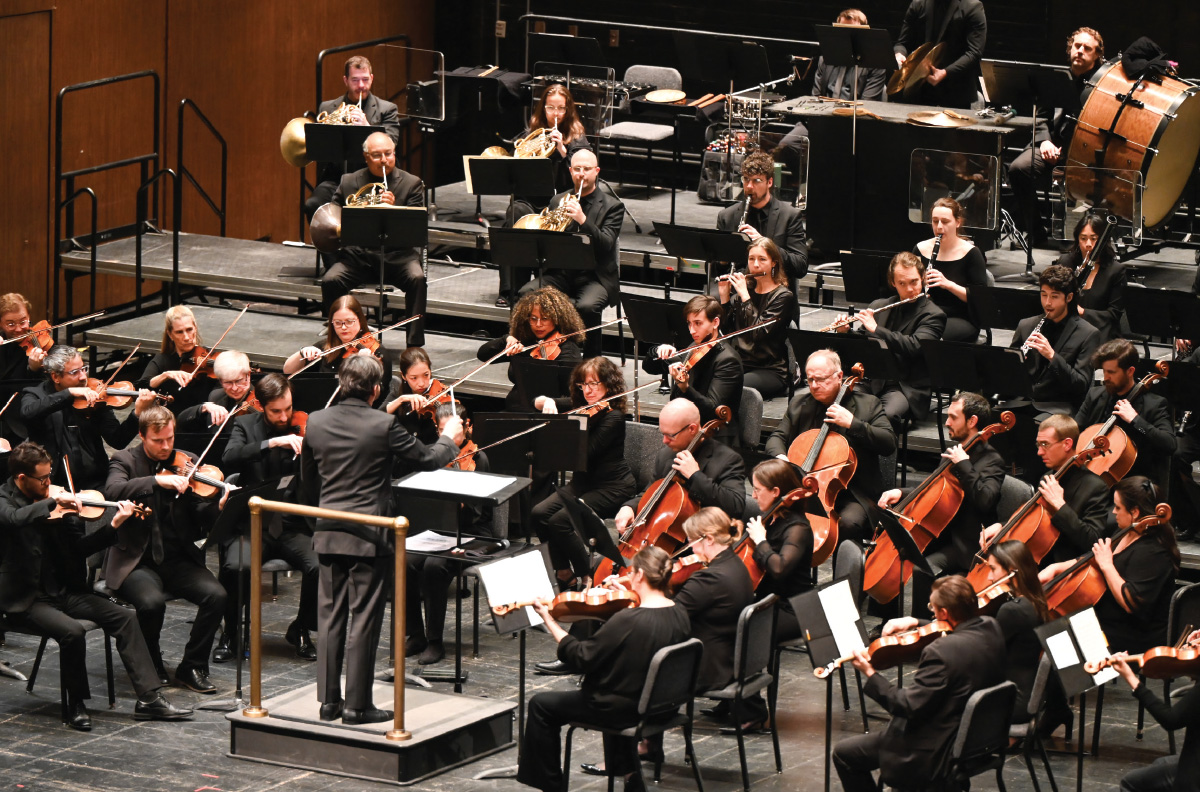
The Tucson Symphony Orchestra, which staged its first concert in 1929, is the oldest continuously operating orchestra in the Southwest.
“As the primary resident of the Linda Ronstadt Music Hall since its opening in 1971, the TSO has been a cornerstone of Tucson’s vibrant downtown arts and culture for over half a century,” said Paul Meecham, president of the TSO.
“We’re very proud,” Meecham continued. “This is an organization that does spectacular things for our audiences. It strengthens our community.”
Almost 38,000 people attended a TSO concert last season, providing a significant boost to local businesses, according to TSO Artistic Administrator Ben Nisbet.
He commented on the evolution of Downtown Tucson.
“Now that so much has changed, people want to come down here not just to see a show, but they want to go to the restaurants. That is unquestionably a very different environment than what it was.”
Nisbet believes that TSO’s diverse programming also helps connect the entire community.
“In terms of the sheer number of offerings we have, we really are trying to do something for everybody,” Nisbet said. “For families, for young people, we offer. . .a broad cultural spectrum. We’ve done a really good job of delivering for our city.”
Toeing the Line
Tucsonan Margaret Mullin is in her fifth season as artistic director for Ballet Tucson. The former Seattle ballet dancer is all too familiar with the challenge of attracting crowds, especially since the pandemic.
“I think there is a challenge to get people back out in the world, to get people to a show rather than watching it on a screen,” Mullin said.
As Ballet Tucson celebrates its 40th anniversary, Mullin spoke about the innovative collaborations, community events and the exciting company premieres that will highlight the organization’s momentum, including “Debonair,” which was inspired by Fred Astaire and Ginger Rogers and choreographed by three-time Tony Award winner Justin Peck.
“We’re bringing the world to Tucson,” Mullin said. “I think the Tucson art scene is excellent. It’s a great secret in a lot of ways; there’s a level of surprise.”
Actors, Arias and More
Arizona Opera, now in its 55th season, offers additional surprises.
“We add to the downtown cultural and economic offerings by bringing in thousands of visitors each year through programming and tens of thousands of dollars in economic impact through people who come to Downtown Tucson to eat, shop, park and stay in hotels before and after performances,” said Brian DeMaris, president and general director of Arizona Opera.
As an added draw, programming is re-expanding after post-pandemic cutbacks with two performances each of modern and timeless classics such as El Gato con Botas (Puss in Boots); The Pirates of Penzance; and La Traviata.
Additionally, a Studio Series will feature performances in partnership with Treasury 1929, and “Opera Everywhere” pop-up venues at the Children’s Museum Tucson and other locations.
Improving lives and connecting people through theatre is a priority for Arizona Theatre Company, the official theatre company of Arizona. ATC is also distinguished as the only member of the League of Resident Theatres that serves two cities—Tucson and Phoenix.
The organization hires local and national artists and has a full-time staff of 65 who facilitate musicals, American classics, new world premieres, wildly popular farces and murder mysteries at the Temple of Music and Art, “just two blocks from the main downtown strip.”
“Our season is filled with enough diversity in offerings that people feel like they just had a complete five-course meal,” said Matt August, Kasser Family Artistic Director of ATC.
That diversity has resulted in a jump in ticket sales for the 2026-2027 season.
“Tickets are selling on average 200% better than the same period from last year. . .we are seeing a deeper impact through the community and building on deeper partnerships with other organizations and reaching out to wider audiences.”
Urban Masterpieces
The downtown visual arts scene is equally vibrant, boasting more than a dozen galleries and museums including the Alfie Norville Gem & Mineral Museum; the Arizona Transportation Museum; Museum of Contemporary Art Tucson; Presidio San Agustín del Tucsón Museum; and the Tucson Museum of Art.
The museums are a huge draw for the area, according to Adriana Kong Romero, Tucson Market president and senior VP for global commercial banking at Bank of America, which has been a proud supporter of TMA and Tucson arts for decades. Bank of America and Merrill Lynch card holders get free admission the first weekend of every month to the TMA or Pima Air & Space Museum.
“We see the arts and cultural institutions as economic drivers, educational resources and powerful tools for bringing people together across generations and backgrounds,” Romero said. “It helps to inspire future generations and attract visitors to our Downtown district.”
A Historic Icon
The 102-year-old TMA at 140 N. Main Ave. boasts a permanent collection of more than 10,000 pieces of Pre-Columbian, Spanish Colonial, American, European, Indigenous, contemporary and folk art. It also features a block with five historic homes on a site that was once part of “El Presidio,” the Spanish military post from which Tucson originated.
Anne Breckenridge Barrett was appointed in May 2025 as the Jon and Linda Ender director and CEO of the four-acre campus.
“Last year was a rebuilding year,” said Breckenridge Barrett, who worked with her team to erase a decades-old deficit during that time. “We really looked at the programming … What I focused on is to understand who we are. We are hyper-local and globally relevant.”
Breckenridge Barrett noted that the mission of TMA is to connect art with life.
“It resonates with everyone that visits Tucson,” she said. “We really want to center on focusing on our community. It has been amazingly fun to do that.”
New programming this year includes the Sonoran Project, which brings artists from around the world to react to the Sonoran Desert.
The museum will also welcome Patrick Dean Hubbell, an artist from the Navajo Nation, for his first solo Arizona museum exhibition: “After Everything, You Embraced My Being Like A Warm, Gentle Breeze” will run at the TMA from Oct. 24 through March 21.
Cutting-Edge Creative at MOCA
That collaborative spirit is also on display at MOCA Tucson, which “inspires new ways of thinking through the cultivation, exhibition and interpretation of contemporary art,” according to Curator Alexis Wilkinson.
The commission-based museum incorporates paintings, drawings, performance, photography, video, and other innovative mediums in exhibitions such as “Light as Resistance” by the artist collective Hilma’s Ghost, on view through Jan. 24, 2027. Also on exhibition this fall and winter are “Only in Darkness Can You See the Stars,” by Coco Fusco; and “After Heaven” by Clifford Prince King, who revisits his Tucson childhood through mediations on memory and family archives.
En Plein Air: Tucson’s Epic Street Art
Art literally meets landscape daily through Tucson’s renowned murals and public art.
Patrons can enjoy self-guided tours downtown and citywide of hundreds of larger-than-life masterpieces such as “Desert Colossus”—Arizona’s tallest mural—and “El Tour de Tucson” by Joe Pagac, along with Ignacio Garcia’s “Los Tres Amigos” celebrating La Fiesta De Los Vaqueros Tucson Rodeo and Rock Martinez’ 50-by-54-foot “Goddess of Agave.”
These outdoor wonders “create visual landmarks and generate interest and engagement,” according to Felipe Garcia, president and CEO of Visit Tucson.
“Tucson’s vibrant mural scene is a powerful example of how creativity can drive economic impact. Public art gives visitors another reason to explore our neighborhoods, discover local businesses and experience the authentic character of our destination.”
Photo courtesy The Tucson Symphony Orchestra
DOWNTOWN: CLICK TO READ ABOUT THE 12 ECONOMIC DRIVERS