

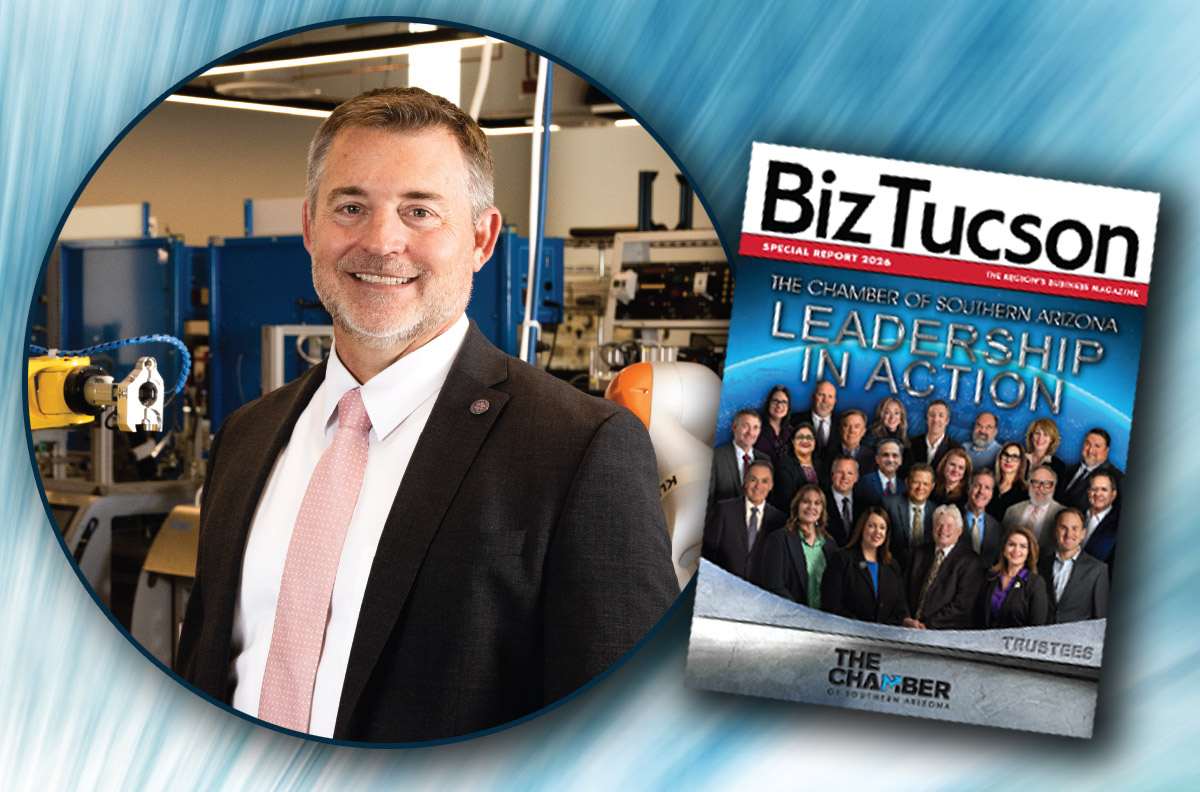
Jeffrey P. Nasse
Chancellor
Pima Community College
Chamber Board Member
What opportunities do you see for your business here in the next several years?
Pima County’s future depends on a modern, highly skilled workforce. We see enormous opportunity to lead that effort. We’re preparing AI-enabled graduates and integrating AI tools and digital fluency across all programs. Whether a student studies healthcare, public safety, advanced manufacturing or business, they’ll graduate ready to work in an AI-driven economy. We’re also rethinking how education is delivered. Moving beyond the traditional semester model allows us to offer shorter, flexible options that fit working adults and fast-changing industry needs. Competency-based education, expanded credential options, and stackable certificates mean students can build clear, affordable career pathways. At the same time, we’re scaling work-based learning across programs. Internships, apprenticeships, and hands-on industry experience won’t be the exception. They’ll be the expectation. That’s how we connect talent to opportunity and help local employers grow their workforce.
What issues keep you up at night?
Emergency preparedness and campus security are always top of mind. If our campus community isn’t safe, nothing else works. I also think a great deal about long-term financial sustainability. We must secure reliable funding while keeping tuition affordable. Community colleges are an engine of economic mobility, and access only works if it remains affordable. Too many students are balancing school with work, family responsibilities, and financial strain. If a student is hungry, housing-insecure or struggling, academic success becomes harder. Supporting the whole student is essential to a strong workforce.
Are there any exciting updates you want to highlight?
We’re poised for transformative investments that align directly with Pima County’s workforce needs. That includes a First Responder Center of Excellence to strengthen public safety career pathways, expanded cybersecurity and engineering programs, and more bachelor’s degrees tied to local employer demand. We’re embedding AI and digital fluency across programs so every graduate is future-ready. Another initiative is our “No Wrong Door” model. At our campuses, students will have a one-stop shop for advising, financial aid, career services and student support. When students can easily access the needed resources, they persist and enter the workforce faster.
How can The Chamber help you going forward?
Community colleges are central to a strong regional business ecosystem. The Chamber can help align us around shared goals, shared accountability and measurable workforce outcomes. We must anticipate workforce trends before they become shortages. That requires real-time dialogue between education and industry. The Chamber can encourage employers to expand internships, apprenticeships, job shadowing, and other opportunities. When students gain meaningful experience in school, they graduate job-ready. When businesses help shape training programs, they get the skilled talent they need.
Photo by Brent G. Mathis
READ THE FULL SPECIAL REPORT HERE.


